End of the Ice Age and Human Civilization
Ruminations about my shift in perspective about ancient human history.
Remember the story of Noah's Ark? As mentioned in the Bible, God instructs Noah to construct a boat and to save the species of the earth from a great flood.
This story has counterparts in all parts of the world such as the Sumerian epic of Gilgemesh, the story of the Manu & the Pralaya in ancient Indian texts and also in Native American fables.
The shared narrative of an ancient great flood, is peculiarly amazing considering the geographical spread.
Is it possible that these flood myths have a factual basis?
We need to go back to 12000 years ago, to the fag end of the last ice age. During the ice age, large swathes of North America and Europe were covered with ice sheets 2 miles thick. The earth at the time of the last ice age looks stunningly different, sea levels were low by almost as much as 400 feet.
Ice core samples from Greenland provide us with a peek of the temperature trend on Earth. As the Earth was gradually warming from the peak of the ice age, there is a sudden dramatic drop in temperature between 10,800 BC and 9,600 BC. This mysterious, turbulent anomaly in the temperature records is called as 'Younger Dryas' by geologists.
The short,acute freeze lasted for 1200 years, after which global temperatures shot up again resuming with the previous warming trend. The crux of the proposition is that the cause of this instantaneous temperature drop was either a comet impact or a massive solar flare event.
We have seen mild templates of both of these events in the past 200 years:
Tunguska event: meteorite impact in Siberia in 1908
Carrington event: super solar flare event in 1859
This cataclysmic event caused might sudden melting of these vast glacial swathes and resulted in a deluge of epic proportions with immense climate instability.
The geological evidence of this shows up in all its glory in the state of Washington(USA). The Channeled Scablands show the remnants of massive flooding , when glaciers melted and receded.
The extinction of mega- fauna like Wooly mammoths, giant sloths, giant beavers and the American Lion in North America, coincides with this dating.
A follow-up question arises, what impact could this tumultuous period have on human settlements?
Commonly accepted history, as taught in school textbooks or as espoused in encyclopedias, tell us that the earliest human civilizations sprung up in Egypt, Mesopotamia, Indus Valley around 5000 BC.
There seems to be a turning point in which humans turned from hunter-gatherers of the Stone Age to an organized agricultural based society.
Recent archaeological discoveries are challenging this linear model of human development. Could there have been some form of a human civilization existing, which was brought to end by the Younger Dryas?
A prime example being the Gobekli Teppe in Turkey, a megalithic structure close to 12000 years old. The massive site poses questions about how people belonging to the 'Old Stone Age' could erect 50(at the least) stone pillars,each weighing 15 tons in concentric patterns. The dating of this site peculiarly coincides with around 9600 BC, which marked the end of the ice age.
Astonishingly, Plato's written dating of the the lost 'mythical' city of Atlantis, which went down under water also points to exactly 9600 BC which seems like a startling coincidence.
Another amazing example can be found on the complex of the Sphinx in Egypt. Geological studies by Robert Schoch indicate the the enclosure of the Sphinx consist of evidence linked to substantial amounts of precipitation induced weathering. Egypt has been arid since 5000 BC(at the least), so although not conclusive, there is an alternate theory that the enclosure of the Sphinx might be an older structure than the pyramids(dated to 3000 BC) itself.
Remember the story of Noah's Ark? As mentioned in the Bible, God instructs Noah to construct a boat and to save the species of the earth from a great flood.
This story has counterparts in all parts of the world such as the Sumerian epic of Gilgemesh, the story of the Manu & the Pralaya in ancient Indian texts and also in Native American fables.
 |
| Imagery of Noah's Ark |
The shared narrative of an ancient great flood, is peculiarly amazing considering the geographical spread.
Is it possible that these flood myths have a factual basis?
We need to go back to 12000 years ago, to the fag end of the last ice age. During the ice age, large swathes of North America and Europe were covered with ice sheets 2 miles thick. The earth at the time of the last ice age looks stunningly different, sea levels were low by almost as much as 400 feet.
| Earth during the Ice Age |
Ice core samples from Greenland provide us with a peek of the temperature trend on Earth. As the Earth was gradually warming from the peak of the ice age, there is a sudden dramatic drop in temperature between 10,800 BC and 9,600 BC. This mysterious, turbulent anomaly in the temperature records is called as 'Younger Dryas' by geologists.
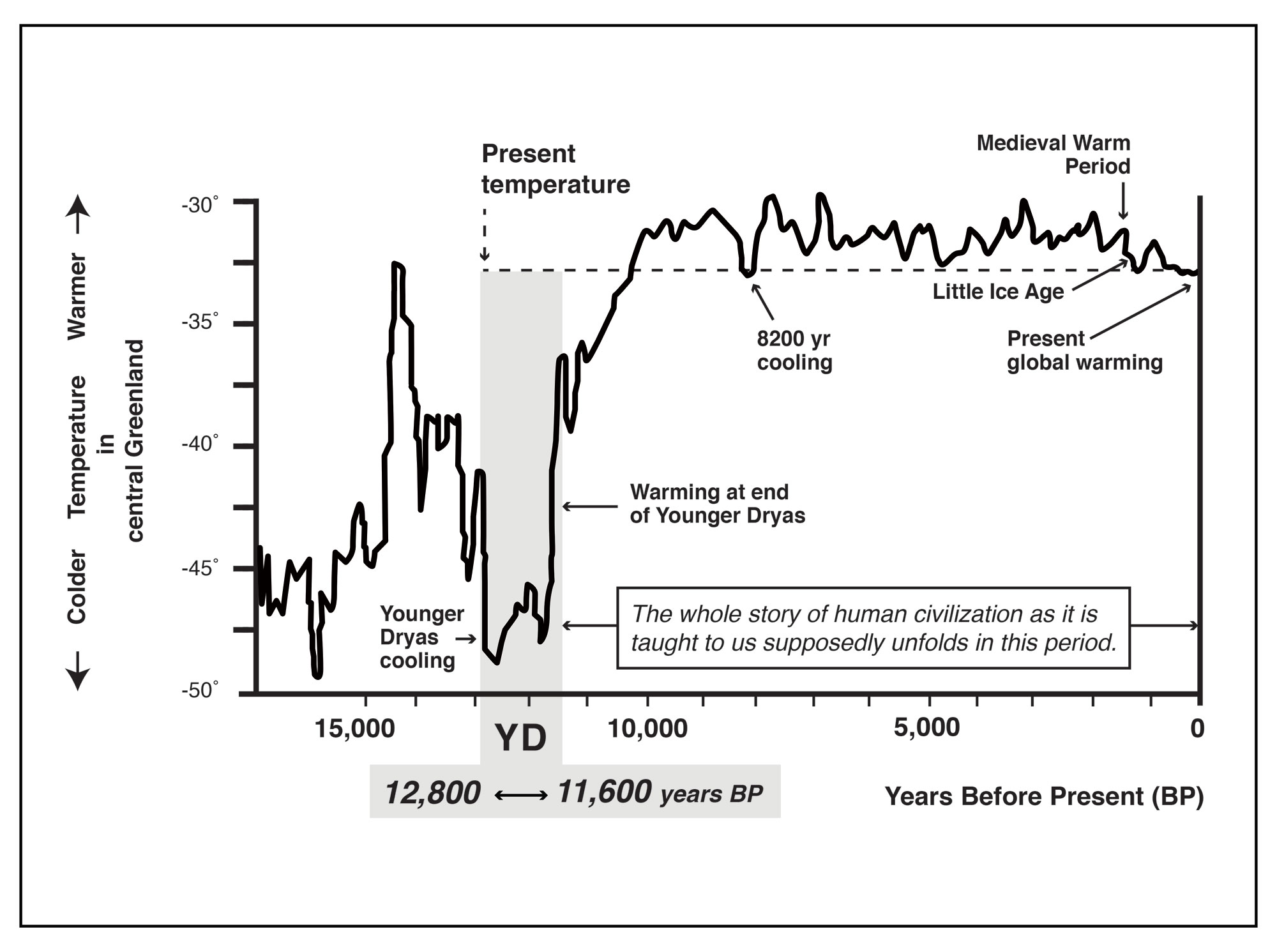 |
| Temperature estimates from ice core samples |
The short,acute freeze lasted for 1200 years, after which global temperatures shot up again resuming with the previous warming trend. The crux of the proposition is that the cause of this instantaneous temperature drop was either a comet impact or a massive solar flare event.
We have seen mild templates of both of these events in the past 200 years:
Tunguska event: meteorite impact in Siberia in 1908
Carrington event: super solar flare event in 1859
This cataclysmic event caused might sudden melting of these vast glacial swathes and resulted in a deluge of epic proportions with immense climate instability.
The geological evidence of this shows up in all its glory in the state of Washington(USA). The Channeled Scablands show the remnants of massive flooding , when glaciers melted and receded.
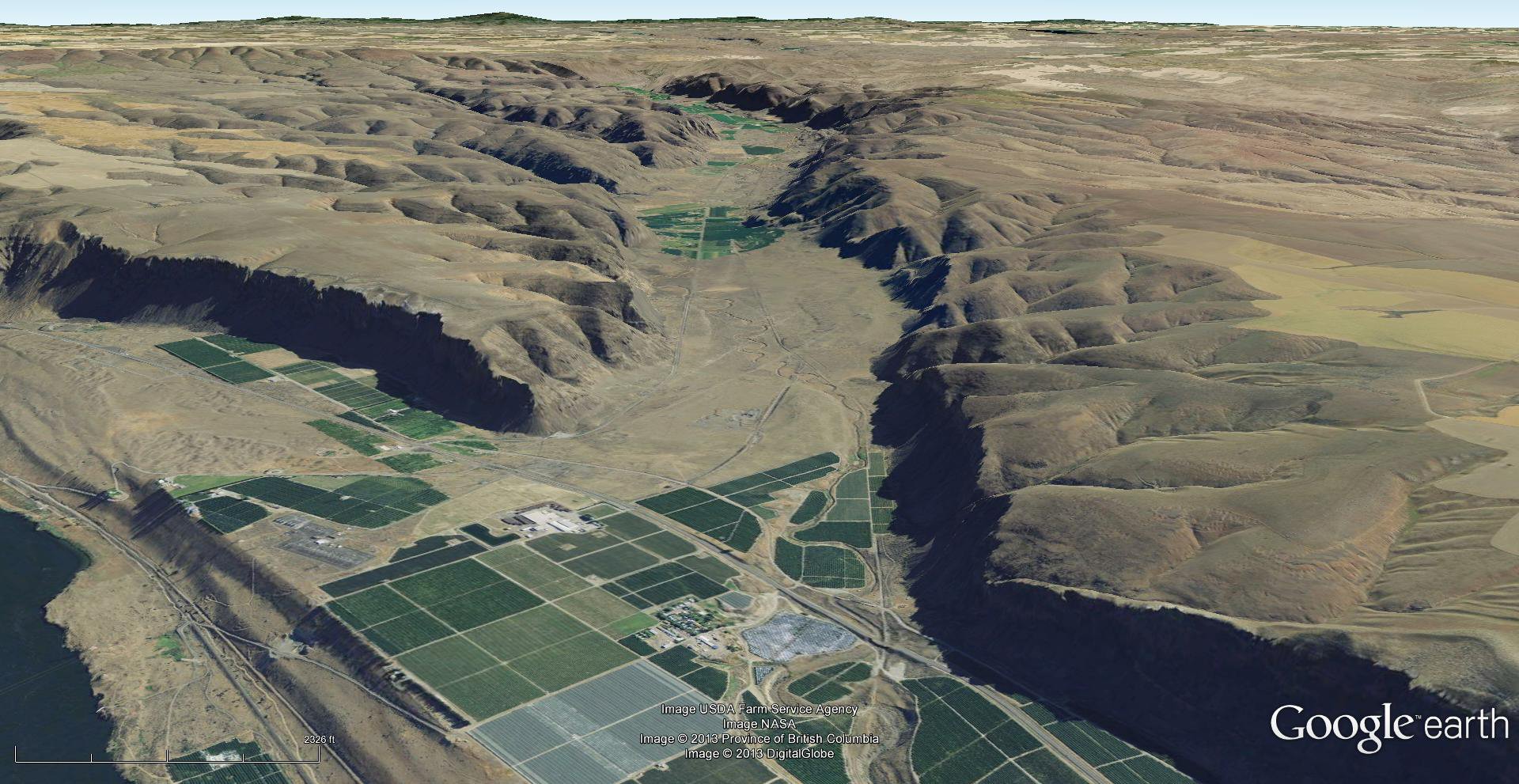 |
| Evidence of massive flooding in the Channeled Scablands, |
The extinction of mega- fauna like Wooly mammoths, giant sloths, giant beavers and the American Lion in North America, coincides with this dating.
 |
| American Lion and a Giant Sloth on a book cover |
A follow-up question arises, what impact could this tumultuous period have on human settlements?
Commonly accepted history, as taught in school textbooks or as espoused in encyclopedias, tell us that the earliest human civilizations sprung up in Egypt, Mesopotamia, Indus Valley around 5000 BC.
There seems to be a turning point in which humans turned from hunter-gatherers of the Stone Age to an organized agricultural based society.
Recent archaeological discoveries are challenging this linear model of human development. Could there have been some form of a human civilization existing, which was brought to end by the Younger Dryas?
A prime example being the Gobekli Teppe in Turkey, a megalithic structure close to 12000 years old. The massive site poses questions about how people belonging to the 'Old Stone Age' could erect 50(at the least) stone pillars,each weighing 15 tons in concentric patterns. The dating of this site peculiarly coincides with around 9600 BC, which marked the end of the ice age.
 |
| Gobekli Teppe |
Astonishingly, Plato's written dating of the the lost 'mythical' city of Atlantis, which went down under water also points to exactly 9600 BC which seems like a startling coincidence.
Another amazing example can be found on the complex of the Sphinx in Egypt. Geological studies by Robert Schoch indicate the the enclosure of the Sphinx consist of evidence linked to substantial amounts of precipitation induced weathering. Egypt has been arid since 5000 BC(at the least), so although not conclusive, there is an alternate theory that the enclosure of the Sphinx might be an older structure than the pyramids(dated to 3000 BC) itself.
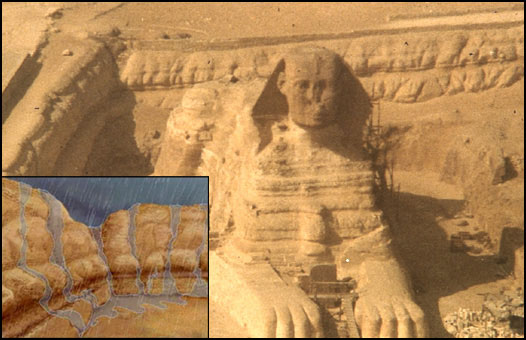 |
| Sphinx and evidence of precipitation based erosion |
It's fascinating that there seems to be growing collection of evidence which might require a complete overhaul of our understanding of human civilization. It's just a reminder that in the grand scheme and scale of things, the modern world in which we are caught up in is nothing but ephemeral.
-Rohit
Inspiration:
1) https://www.youtube.com/watch?v=0H5LCLljJho
2 ) https://www.youtube.com/watch?v=Vka2ZgzZTvo
-Rohit
Inspiration:
1) https://www.youtube.com/watch?v=0H5LCLljJho
2 ) https://www.youtube.com/watch?v=Vka2ZgzZTvo
Comments
Post a Comment